What an International Secretariat Actually Does
An international secretariat organizes meetings, records decisions, and coordinates follow-up. Learn how to tell its administrative work from member-state authority.
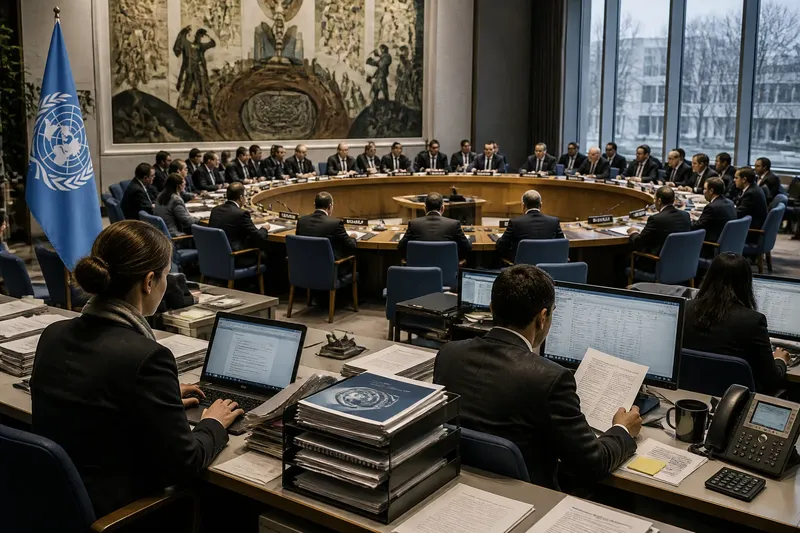
An international secretariat can prepare a policy paper without having the authority to adopt the policy it describes. To understand who made a decision, identify which body approved it and what the organization’s rules allow that body to do.
What does an international secretariat do?
An international secretariat is the administrative and professional staff supporting an international organization or one of its bodies. It may maintain records, prepare meetings, provide technical analysis, manage communications, and coordinate tasks after participants agree on a course of action.
Its structure varies. A treaty-based organization may have a standing secretariat led by a secretary-general or executive head. A smaller commission may use a compact office, while a temporary conference may set up a secretariat for its work. The title describes a support function, not a universal rank or set of powers.
The founding treaty, rules of procedure, and decisions establish what a particular secretariat may do. Its staff help the institution conduct its business; they do not automatically hold the governing body’s authority.
Who has authority to decide?
Formal authority usually belongs to a governing body established by the organization’s rules. Depending on the institution, that may be an assembly of member states, a council, a committee, or a conference of parties to an agreement. The body may decide by consensus or follow a specified voting procedure.
Representatives may negotiate language, approve budgets, adopt resolutions, or set priorities. Secretariat staff can help prepare those actions, but assistance is not authorization. If a resolution “calls on” members to act, its wording and the organization’s legal framework matter more than who drafted it.
Members may delegate particular administrative or technical powers to a secretariat or executive head. Delegation has limits. Authority to publish a report, for example, does not by itself give staff power to create a new obligation for member states.
What work does the secretariat handle?
Before a formal decision, staff may assemble background documents, organize interpretation, reserve meeting facilities, circulate agendas, and explain procedural requirements. These tasks help representatives deliberate across languages and locations.
Secretariat staff may also collect information, maintain databases, prepare technical papers, and explain how earlier decisions relate to a current proposal. Their expertise can clarify a complicated issue, but staff analysis is not automatically an endorsement by member states.
After a governing body acts, staff may communicate the result, track requested reports, organize technical assistance, or coordinate work among departments and partner organizations. They can carry out an approved program within their assigned responsibilities. Administrative activity does not silently turn an unapproved proposal into adopted policy.
- Preparation: Check whether an agenda or meeting paper is marked as a draft. If it is, treat it as preparatory material; if it is adopted, check which body approved it.
- Information: Check whether a paper identifies its authors and status. If it is staff analysis, read it as analysis; if a governing body endorsed it, look for the formal record of that endorsement.
- Coordination: Check whether a task is assigned to the secretariat in a decision. If it is, identify the stated task; if it is not, do not assume staff have authority to take it on.
- Follow-up: Check whether a decision names responsible actors. If it assigns work to staff, look for their reported progress; if it assigns work to member governments or partners, distinguish their responsibilities from the secretariat’s.
- Communication: Check whether a statement presents an agreed decision or a staff update. If it cites an adopted act, trace that act; if it reports ongoing work, do not treat the update as a new commitment.
- Delegation: Check the treaty, rules, or decision for a delegated power. If the text authorizes the action in question, read it within that scope; if it does not, look to the body with the relevant authority.
How can you tell support from authority?
Start with the document and the actor it names. A staff report, chair’s summary, secretariat note, and adopted resolution may cover the same subject without having the same status. Check who issued the document, whether it was approved, when approval occurred, and which rules apply.
Then examine the verbs. “Prepared,” “submitted,” “recommended,” and “reported” often describe staff work or advice. “Adopted,” “approved,” or “decided” may indicate a formal act, but only if the named body had authority and followed the required procedure. The words alone are not conclusive.
Imagine a fictional regional council asks its secretariat to draft options for a shared reporting system. Staff consult technical specialists and circulate a paper marked “for discussion.” The council later approves one option in a recorded decision, and staff organize the reporting process under that authorization. The paper helped shape the choice; the council’s recorded approval supplied the authority.
Why can staff shape an outcome without deciding it?
The distinction between authority and administration does not mean staff have no influence. The people preparing a meeting can affect which information is available, how options are organized, and whether a proposal is clear enough to discuss. Technical judgment matters when representatives rely on staff to explain a specialized subject.
That influence is not a mandate to decide. Representatives can request revisions, reject a recommendation, or choose another course under their rules. Ask both who had formal power to approve the action and how the secretariat’s work informed the decision.
Staff are generally expected to serve the institution rather than act as delegates of one government, but duties, appointment arrangements, and safeguards differ. A public statement may communicate an agreed position, summarize ongoing work, or express the view of the organization’s leadership. Check its source and status rather than treating these categories as interchangeable.
What questions help identify the secretariat’s role?
Can a secretariat make rules for member states?
Not simply because it is the secretariat. It may exercise powers delegated by the organization’s rules or members, but the scope depends on the relevant legal and procedural documents.
Is the secretary-general the same as the secretariat?
No. A secretary-general or executive head may lead the staff and hold specific responsibilities, while the secretariat is the office and personnel supporting the organization. The head’s role depends on the institution’s governing rules.
Does a secretariat report mean members agreed?
No. A report may present staff analysis, record information, or describe a process without expressing an adopted position. Check whether a governing body formally endorsed or adopted it.
Who carries out an organization’s decision?
That depends on the decision. Secretariat staff may coordinate assigned tasks, while member governments, implementing agencies, or other partners carry out substantive action. Read the decision to see who is responsible for each task.
Where can you check the limits of a secretariat’s role?
For a specific institution, begin with its founding treaty or charter and rules of procedure. These documents identify governing bodies, their powers, and how they may delegate work. The organization’s official website may publish them alongside resolutions, meeting records, and descriptions of the secretariat.
When following a news report, trace its claim to the source if possible. A press release may summarize a decision in accessible language, while the official record shows which body acted and what it approved. Treat a staff briefing or draft as information about the process, not proof that a governing body made a commitment.
To understand what an international secretariat actually does, trace the action to its source: identify the document, the body that approved it, and the rules behind that body’s authority. That habit also helps distinguish a staff update from a commitment members have formally adopted.